
Fix the future of work
A platform that turns shared experience in everyday work into living evidence of what works and what doesn't.
Psychosocial risk management platform
Why
The rise of psychosocial risk is a symptom of workplaces being broken. While the foundations of work fundamentally haven't changed since the mid 1900s, technology and society have moved on. It's time to make a change.
What
A continuous connection to rebuild the foundations of work
Organisations
- Shared experiences in everyday work that reconnect people
- Systemic risk tracking to prevent harm
- Structured way to easily evaluate what works and what doesn't
Reflectal
- Independent and de-identified to protect privacy at all levels
- Funds and facilitates independent research
- Connect workplaces, regulators, policy makers and insurers to evidence of what is and isn't effective
Independent research
- Ethics approved and governed research
- Independent validation of the psychosocial hazard assessment tool
- Open research model, no pre-set agenda to bias findings
How
An experience that values people, time and shows where to focus to prevent harm
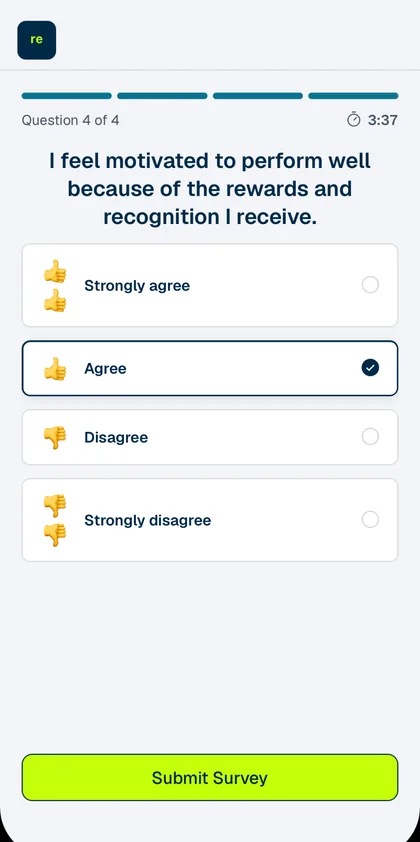
Four questions, a validated psychosocial hazard assessment.
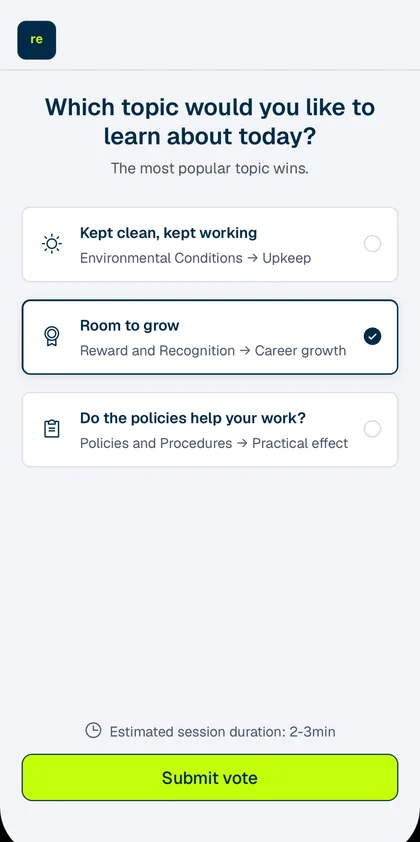
Team autonomy, vote, discuss and learn together.
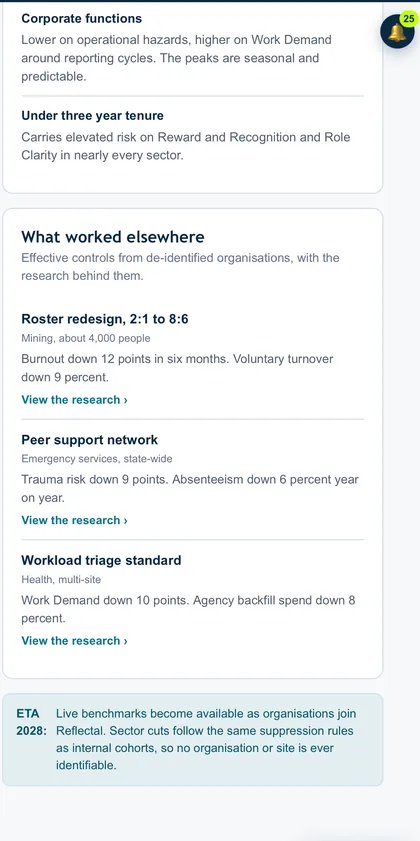
A system that finds root causes in the complexity of modern work.
Who we serve
Built for essential work and the teams that support it
Remote and fly-in fly-out workforces in high-consequence environments.
Project-based teams under deadline pressure, with a high contractor mix.
Direct and indirect trauma exposure, shift work, skills variance and areas of high turnover.
Early educators, teachers and university staff facing conflicting workload, pastoral care and public perception priorities.
A platform that reduces leader burden, where anyone can lead a check-in and peers are guided rather than told. Leaders support the individuals who need it, peers support each other.
People, finance, IT, commercial, the teams balancing multiple reporting lines, projects, systems, timezones under the guise of a 9-5.
Confidence to stop what's not working and take action to prevent harm. Give back by sharing what works.
Our priority projects for FY26/27 are exploring how different individual workplace factors impact psychosocial risk in emergency response roles. How you can help
Research project - emergency response
Help by sharing your experience to build the evidence
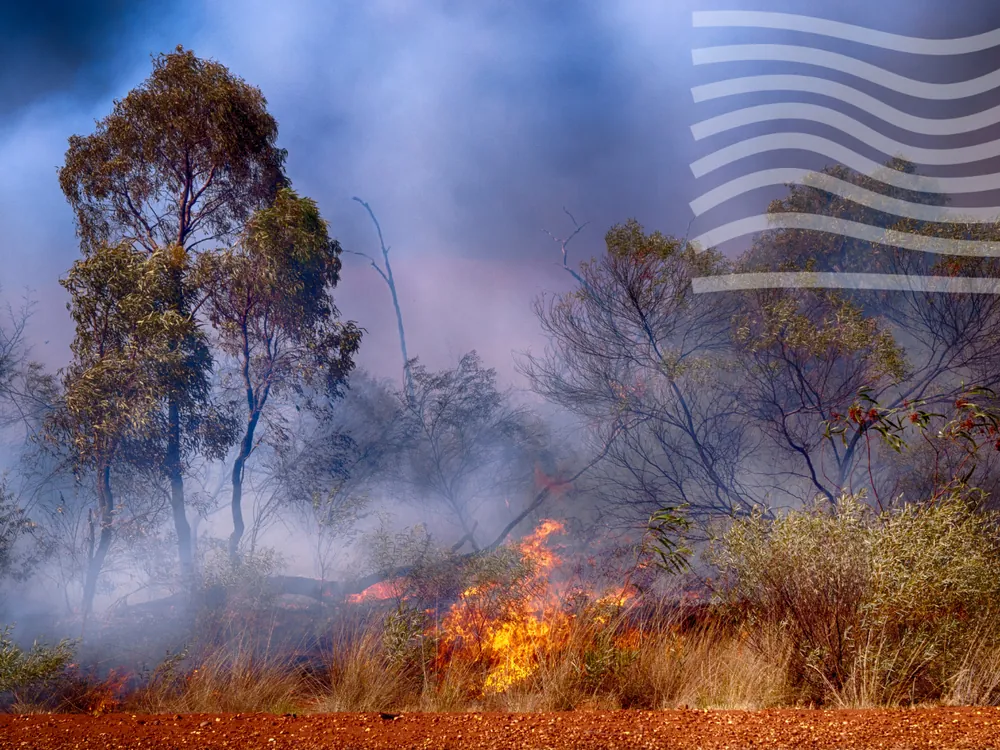
Image ID: a close up photo of a small bushfire with smoke obscuring trees.
Early findings indicate that psychosocial experiences and support needs differ meaningfully across demographic and intersectional groups, including gender, age, cultural background, caring responsibilities and occupational role. University Psychological Sciences Discipline Group Lead - Research
What we know
- Emergency responders experience some of the highest rates of mental health conditions in the Australian workforce.
- Current research is almost entirely based in public services: career police, firefighters and paramedics.
What we don't know
- How experiences are different for emergency responders in site-based, FIFO, DIDO, volunteer, dual-role and contractor roles
- How operational factors including rosters, shift patterns, remote and isolated work and technology availability impact learning effectiveness and support.
- How individual experiences and backgrounds impact psychosocial risk factors amongst emergency responders.
This research is independently University led and ethics approved under HREC 2025-105. Any Australian worker 18+ can participate to support building the baseline.
Register below to participate